Some might say it’s not easy being a do-gooder.
Whether it’s hard or not, those involved in ministries like soup kitchens have a different attitude. And it opens them up to being surprisingly enriched.
Take for example, the volunteers at Mother Marianne’s West Side Kitchen, who this past month broke the 50,000-meal milestone.
“By the end of April, we had served 50,987 meals,” kitchen supervisor and volunteer coordinator Vicki Montalbano noted. “Already this year, we’ve seen a 30 percent increase over last year at this time.”
The increase in noontime meals came as no surprise, she said.
“What did come as a surprise was the over 50,000 blessings that have flowed from the privilege of serving. Volunteers express to me every day the blessings they have received from working with each other and our guests. Our guests express the same. God and the community have been very generous to the kitchen. As we pray daily that the need for our mission to feed the hungry will decrease, we also give prayers of joyful thanksgiving to able to come together as Mother Marianne's family, volunteers and guests alike. After all, ‘all are welcome at Mother Marianne’s West Side Kitchen’. And it shows!”
ACCROSS TOWN there were blessings of another sort this month at The Salvation Army and at the Rescue Mission of Utica.
At the Army's 125th Anniversary celebration May 10, guest speaker Donna Donovan, publisher of The Observer-Dispatch, said she was inspired by the evening's frequent references to living the Gospel and added one of her favorite quotes, oft-attributed to St. Francis of Assisi: Preach the Gospel at all times. If necessary, use words.
In 1885, Salvation Army officers arrived to rousing crowds and were pelted with eggs. The 125th anniversary told a different story, with Congressman Michael Arcuri and Oneida County Executive Anthony Picente showing up to praise the Army's untiring work, and with Capt. Frank Picciotto, the local officer and pastor, mentioning how at Christmas they visited 1,900 senior citizens in nursing homes, gave food to 585 families, and provided gifts to 1,060 children.
At the Rescue Mission's 16th Annual Alumni Banquet May 17, graduates of the residential treatment program gave witness to the life-changing power of faith.
Pointing to the evening’s theme, “out of darkness into the light,” staffer and emcee Ernie Talerico said that overcoming addictions was just like walking into the light. And God makes it all possible, he told some 150 attendees. The banquet was dedicated to the memory of graduate Patrick Marley and included the presentation of a memorial plaque to his parents and siblings.
“It’s just a wonderful community here,” said Marley’s sister, Diana. “We will always love and appreciate everyone here at the Rescue Mission for what they did for my brother…They rescued Pat.”
Another highlight was the presentation of the Clarence Seaburg Scholarship, named after a former executive director, to a graduate seeking to advance his education. Chaplain Rick Johnson presented this year’s award to Utican Tom Salsbury, who is pursuing a nursing degree at Mohawk Valley Community College while working as an emergency room nurse’s aide.
“I started to volunteer at the hospital while I was here, and I loved it,” Salsbury said.
The evening featured testimonies by other program graduates who consistently pointed to the Mission’s faith-based approach as making a life-changing impact.
“I’d like to begin by thanking the Lord,” said Eric, who came in from Connecticut where he is now an assistant manager at a local business and has reunited with his family. He spent five months at the Mission after being released from prison. At first, “I didn’t want to be here,” he recalled. But then he discovered that God wasn’t done with him. “He has exciting things in store for each and every one of us.”
It has been three years since he was in the residential treatment program, said another graduate, Dale. And while there, he decided to bake a birthday cake for his niece. That led to being asked to bake a cake for a staffer’s birthday, and people started saying, “you have a real talent.”
Working through the Mission’s Learning Center, he was able to apply to the Culinary Institute of America. He graduated with an associate’s degree there last September and is now pursuing his bachelor’s in culinary arts.
“I owe it all to the glory of God…and you guys here at the Rescue Mission…”
Another graduate, Renard, said simply: “I was a broken soul. What the Rescue Mission did was to encompass the soul of the man.” Now a licensed practical nurse, he noted: “The Rescue Mission taught me to overcome my problems rather than have problems overcome me.”
A fourth graduate drew rousing applause when he said: “Tonight, I have been about five and a half years clean off drugs and alcohol.” And he is working toward getting his CASAC license to become a certified alcohol and substance abuse counselor.
The last impromptu testimony came not from a graduate, but from the Rev. Barrett Lee, who, fresh out of the seminary, spent two years as a counselor and care provider at the Mission’s Addictions Crisis Center. He thanked the staff for giving him an education he could never have gotten in school.
“They take it out of the text book and put it into reality. That’s what these guys do.”
That experience was enriching. A blessing. Because it led him to become a “street pastor” and start St. James Mission, a ministry to street people and the poor in Utica. He's a kindred soul to the soup kitchen volunteers serving the working poor, the jobless and and the homeless of West Utica.
Wednesday, May 19, 2010
Thursday, April 29, 2010
I Was Homeless
A line of people quickly queued up at the serving station, glad to be out of the unspring-like 45 degree weather. Three moms with bundled-up infants and a toddler in strollers shivered off the chill.
“Good morning! How are you today?” beamed volunteer Katie Koscinski, SFO, as she placed turkey or bologna sandwich, orange slices and a muffin on a tray. Next to her, volunteer Anna Pereira was ladling soup and greeting the hungry with a big smile and friendly words.
Most of the hungry people responded in similar fashion. Many were extremely polite. A friendly, peaceful place, even with the songs emanating from Sr. Roberta Southwick’s organ and microphone in the dining hall.
As Anna and Katie served 90 meals Wednesday, two other regular volunteers, John McCabe and Ronald Macior, were helping parents with their children’s trays, cleaning tables and flitting back to the kitchen with dirty trays and to check on what needed to be done.
“The Good Lord” brought him to the soup kitchen, Ron noted. He volunteers every day, and looks forward to coming in when he gets up in the morning.
“A year and a half ago I was homeless. I’ve been to rock bottom. The same as some of the people we’re serving here.”
He had found himself unemployed after spending 12 years in restaurant and kitchen work. He’s looking forward to returning to the restaurant scene, but in the meantime he has a friendly word to say to practically everyone coming to the soup kitchen.
Back in the kitchen, Codey Kistner was spending his first day as a volunteer, scrubbing and sanitizing trays and other kitchen equipment.
Encouraged by his father who wanted him to get involved in parish life, Codey said he planned to come in as often as he could. “I love it. It’s fun. And the people are nice.”


This blog has moved
This blog is now located at http://westsidekitchen.blogspot.com/.
You will be automatically redirected in 30 seconds, or you may click here.
For feed subscribers, please update your feed subscriptions to
http://westsidekitchen.blogspot.com/feeds/posts/default.
Tuesday, March 9, 2010
We Are A Gift to Each Other
Mother Marianne’s West Side Kitchen marks its second year milestone on March 10.
It is notable for several reasons:
1. The daily lunchtime soup kitchen remains self-sufficient, with an all-volunteer staff, good-hearted donors, and even a few grants.2. It’s a ministry, driven by the Gospel call to see Christ in others and to meet need where it exists.
3. The need is growing. The working poor, the unemployed, the homeless remain in our midst. As of the end of February, the soup kitchen has served a total of 46,323 meals since opening its doors in March 2008. In the first two months of 2010, volunteers served 4,211 meals to 329 children, 3,591 adults and 283 elderly persons. That’s 813 more meals than the same two months last year – a 19.3 percent increase.
4. The people being served are a blessing. Volunteers find themselves in a privileged place.
Reflecting on the past two years, soup kitchen director Deacon Gil Nadeau says the first word that comes to mind is “generosity.”
"It’s the generosity of our donors and of our volunteers. The Holy Spirit has given all of us who are involved many gifts. We generously give these gifts to our neighbors who are in need. And the gifts bear fruit, such as a greater feeling or sense of love, joy, peace, kindness, goodness, faithfulness and gentleness. Sometimes I wonder who benefits more from this ministry – our guests or our volunteers and supporters."
“My sense is that we are a gift to each other.”
Sunday, November 29, 2009
More than a Meal
" 'A Fantastic Thanksgiving' at Mother Marianne's."
That was the headline in The Observer-Dispatch this past Friday (Nov. 27).
A reporter and a photographer visited the soup kitchen, mingling with volunteers and guests, and then visited the Rescue Mission across town.
Soup kitchen director Deacon Gil Nadeau told the reporter they expected to serve 200 meals of hot turkey, stuffing, mashed potatoes and vegetables. The scene was festive. Guests were feasting and chatting and sometimes swaying to tunes emanating from Sister Roberta Southwick's keyboard and mic.
One guest summed it up for the reporter:
"Being here makes it a fantastic Thanksgiving. These people here are just wonderful."
At the Rescue Mission, volunteers were serving nearly 300 turkey dinners and delivering another 600 to the home-bound, the Rev. Bill Dodge, executive director, told news media.
It, too, was a festive scene as the lonely, the homeless, the addicted, the jobless and the working poor were treated "like family."
Both Deacon Gil and Rev. Bill agreed on one thing: Thanksgiving is more than a meal.
The best part, Deacon Gil said, "is the camaraderie, having people come in here and enjoying a nice lunch together."
Noted Rev. Bill: "The meal is important, but so is human kindness, personal warmth and fellowship."
Sunday, November 22, 2009
The Franciscan Connection
While in New Mexico recently, I met a man who prays and then acts. He seems to have a deep prayer life, somewhat contemplative, which opens him up to hearing the promptings of God.
His name is Don Ryder. He's a Secular Franciscan. And he was in Albuquerque to accept the National Franciscan Peace Award from the Secular Franciscan Order.
He has worked in soup kitchens and shelters. He has traveled with church groups to Jamaica to build churches, clinics, and homes for the poor. While in Jamaica, he met a missionary priest from Kenya who suggested a visit to his African homeland.
That led to a trip to Kenya to help build a church and repair homes. While there, he got to visit a Maasai tribal village in the semi-arid Great Rift Valley. Six months after returning home to Wausau, Wisconsin, Don got an email from the Vatican describing a worsening drought in Kenya. He emailed a Kenyan contact, who confirmed the Maasai were particularly hard-hit. Livestock were dying. People were sick and dying. Infant mortality was high. Maasai women had to travel by foot up to 15 miles one way to fetch water from dirty waterholes or contaminated streams. Some were getting raped enroute.
Don prayed. He decided to open the Bible at random. His eyes fell to John's Gospel, where Jesus, hanging on the cross, cries out, "I thirst."
"That impacted me," Don recalled. "It hit me that the Passion continues today with our Maasai sisters and brothers."
But he also thought, "Who am I? What can I do?"
He tried to put it out of his mind. He couldn't. A few days later he opened the Bible again, deliberately avoiding the Gospel of John. This time his fingers fell to a passage in Mathew where Jesus says, "I was thirsty and you gave me drink."
"Bam!" he said.
He recalled thinking, "I'll see what I can do, but it's in your hands, Lord."
He did some research and decided to raise money to drill a well. It would cost over $60,000.
He spoke to his parish priest about it and the parish got involved. He brought it up to Secular Franciscans and his fraternity jumped on board. Romey Wagner, the man who would become his co-leader, stepped forward.
Soon donations started coming. Coins from school children. $2,000 from a young couple. Word spread. Dollars arrived from all over the country.
They completed one well, drilling down 400 feet. It has a tank and pump house powered by a diesel engine. It's now providing clean water for between 4,000 and 5,000 Maasai and 100,000 head of cattle. Just last month they completed a second well, further north. This one is powered by a windmill. They ran pipe to a school with 400 students and are running pipe to a dispensary. Now that it will have running water, Don hopes it will be upgraded to a hospital.
Since the scarcity of water can lead to harm, even war, the Kenyan water project caught the imagination of the Peace Award Committee.
The award came with a $2,000 stipend. It didn't take long for Don to give it away, wiring it to a priest in Kenya who helped with the water project and who, with funds from the Vatican, built a church in the vicinty of the second well. But he ran out of money and couldn't furnish it. Then Don learned the priest and the people decided to dedicate the church to St. Francis of Assisi.
So now there is a St. Francis Church in Kenya's Great Rift Valley that's going to have pews and other furnishings, thanks to Don's Franciscan Peace Award.
His name is Don Ryder. He's a Secular Franciscan. And he was in Albuquerque to accept the National Franciscan Peace Award from the Secular Franciscan Order.
He has worked in soup kitchens and shelters. He has traveled with church groups to Jamaica to build churches, clinics, and homes for the poor. While in Jamaica, he met a missionary priest from Kenya who suggested a visit to his African homeland.
That led to a trip to Kenya to help build a church and repair homes. While there, he got to visit a Maasai tribal village in the semi-arid Great Rift Valley. Six months after returning home to Wausau, Wisconsin, Don got an email from the Vatican describing a worsening drought in Kenya. He emailed a Kenyan contact, who confirmed the Maasai were particularly hard-hit. Livestock were dying. People were sick and dying. Infant mortality was high. Maasai women had to travel by foot up to 15 miles one way to fetch water from dirty waterholes or contaminated streams. Some were getting raped enroute.
Don prayed. He decided to open the Bible at random. His eyes fell to John's Gospel, where Jesus, hanging on the cross, cries out, "I thirst."
"That impacted me," Don recalled. "It hit me that the Passion continues today with our Maasai sisters and brothers."
But he also thought, "Who am I? What can I do?"
He tried to put it out of his mind. He couldn't. A few days later he opened the Bible again, deliberately avoiding the Gospel of John. This time his fingers fell to a passage in Mathew where Jesus says, "I was thirsty and you gave me drink."
"Bam!" he said.
He recalled thinking, "I'll see what I can do, but it's in your hands, Lord."
He did some research and decided to raise money to drill a well. It would cost over $60,000.
He spoke to his parish priest about it and the parish got involved. He brought it up to Secular Franciscans and his fraternity jumped on board. Romey Wagner, the man who would become his co-leader, stepped forward.
Soon donations started coming. Coins from school children. $2,000 from a young couple. Word spread. Dollars arrived from all over the country.
They completed one well, drilling down 400 feet. It has a tank and pump house powered by a diesel engine. It's now providing clean water for between 4,000 and 5,000 Maasai and 100,000 head of cattle. Just last month they completed a second well, further north. This one is powered by a windmill. They ran pipe to a school with 400 students and are running pipe to a dispensary. Now that it will have running water, Don hopes it will be upgraded to a hospital.
Since the scarcity of water can lead to harm, even war, the Kenyan water project caught the imagination of the Peace Award Committee.
The award came with a $2,000 stipend. It didn't take long for Don to give it away, wiring it to a priest in Kenya who helped with the water project and who, with funds from the Vatican, built a church in the vicinty of the second well. But he ran out of money and couldn't furnish it. Then Don learned the priest and the people decided to dedicate the church to St. Francis of Assisi.
So now there is a St. Francis Church in Kenya's Great Rift Valley that's going to have pews and other furnishings, thanks to Don's Franciscan Peace Award.
Sunday, October 18, 2009
Priest. Friar. Friend. Brother.
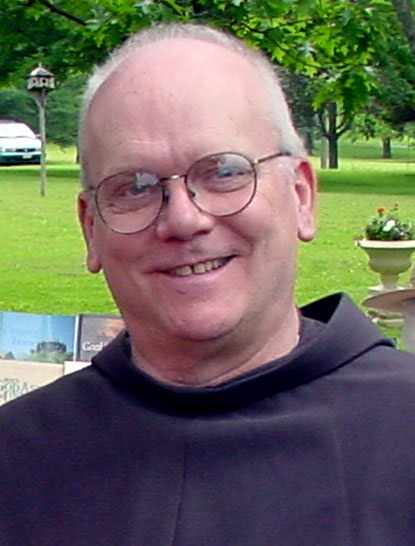
We didn't get to know Friar Kevin Kenny, OFM Conv., until long after he had spent months in Assisi, home of Saint Francis.
We didn't get to know him until long after he had been a teacher in Pittsburgh, and vocation director at St. Francis Seminary on Staten Island.
We didn't get to know him until long after he had left New York City, where he ministered to the homeless, prostitutes and runaway kids.
We did get to know him after he was appointed director of Bl. Kateri National Shrine and Indian Museum in Fonda, NY, and especially after he was appointed spiritual assistant to the Secular Franciscans of St. Joseph Fraternity at St. Joseph-St. Patrick Church, Utica. And he got to know us. He participated in our monthly gatherings, presided at liturgical services and witnessed our professions. He listened, he shared insight and laughter, he became our brother.
When we Secular Franciscans helped launch Mother Marianne's West Side Kitchen, he encouraged us to, like Dorothy Day, accept everyone coming to our door without any preconceptions, and he admonished us to avoid exploiting our guests, even if they gave permission to use a name or photo. He spoke passionately from his own soup kitchen experience in the Big Apple.
We were blessed.
And now he is blessed to be with our Lord, having embraced Sister Death on Oct. 16, 2009 at the age of 69. So, even with heavy heart, we rejoice!
Amen.
We didn't get to know him until long after he had been a teacher in Pittsburgh, and vocation director at St. Francis Seminary on Staten Island.
We didn't get to know him until long after he had left New York City, where he ministered to the homeless, prostitutes and runaway kids.
We did get to know him after he was appointed director of Bl. Kateri National Shrine and Indian Museum in Fonda, NY, and especially after he was appointed spiritual assistant to the Secular Franciscans of St. Joseph Fraternity at St. Joseph-St. Patrick Church, Utica. And he got to know us. He participated in our monthly gatherings, presided at liturgical services and witnessed our professions. He listened, he shared insight and laughter, he became our brother.
When we Secular Franciscans helped launch Mother Marianne's West Side Kitchen, he encouraged us to, like Dorothy Day, accept everyone coming to our door without any preconceptions, and he admonished us to avoid exploiting our guests, even if they gave permission to use a name or photo. He spoke passionately from his own soup kitchen experience in the Big Apple.
We were blessed.
And now he is blessed to be with our Lord, having embraced Sister Death on Oct. 16, 2009 at the age of 69. So, even with heavy heart, we rejoice!
Amen.
Subscribe to:
Posts (Atom)